
Last updated November 4, 2026
 Sweep & inspection
 Caps & crowns
 Flue relining
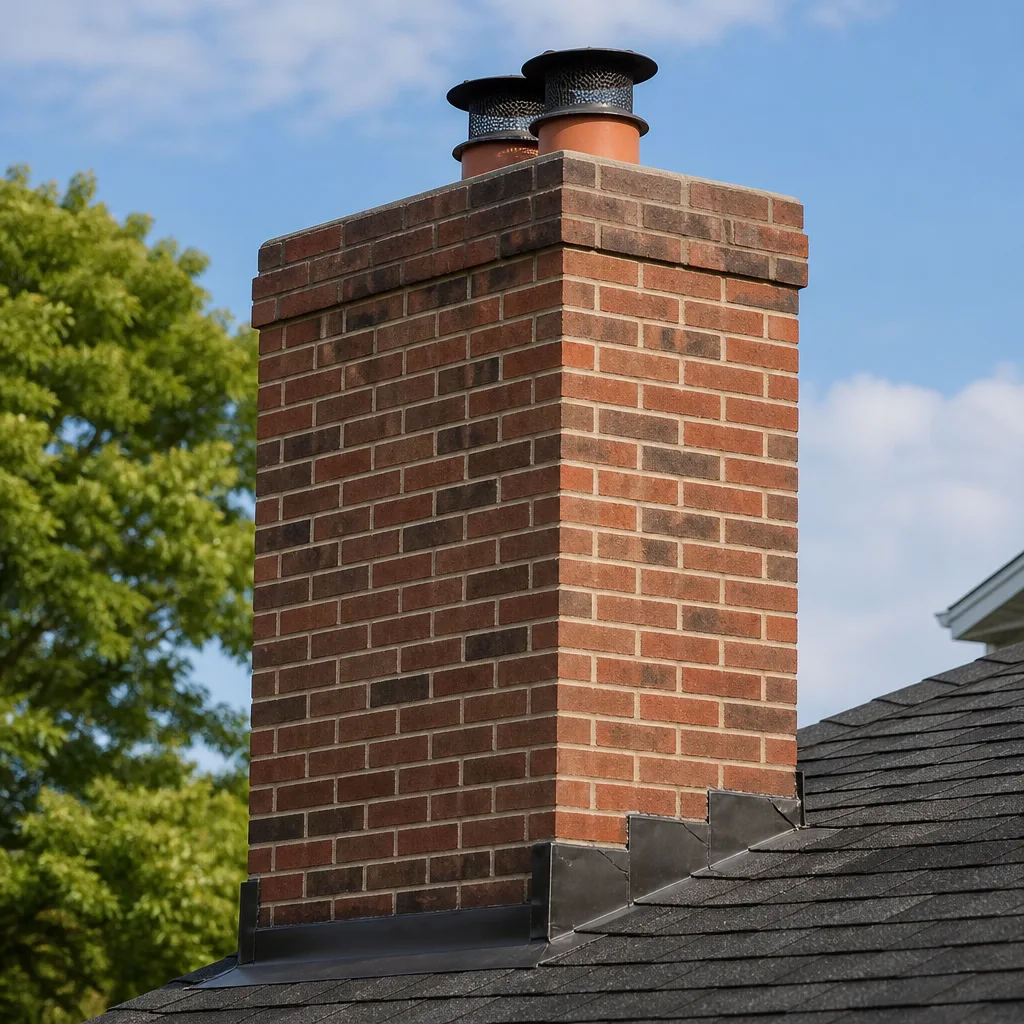 Masonry repair
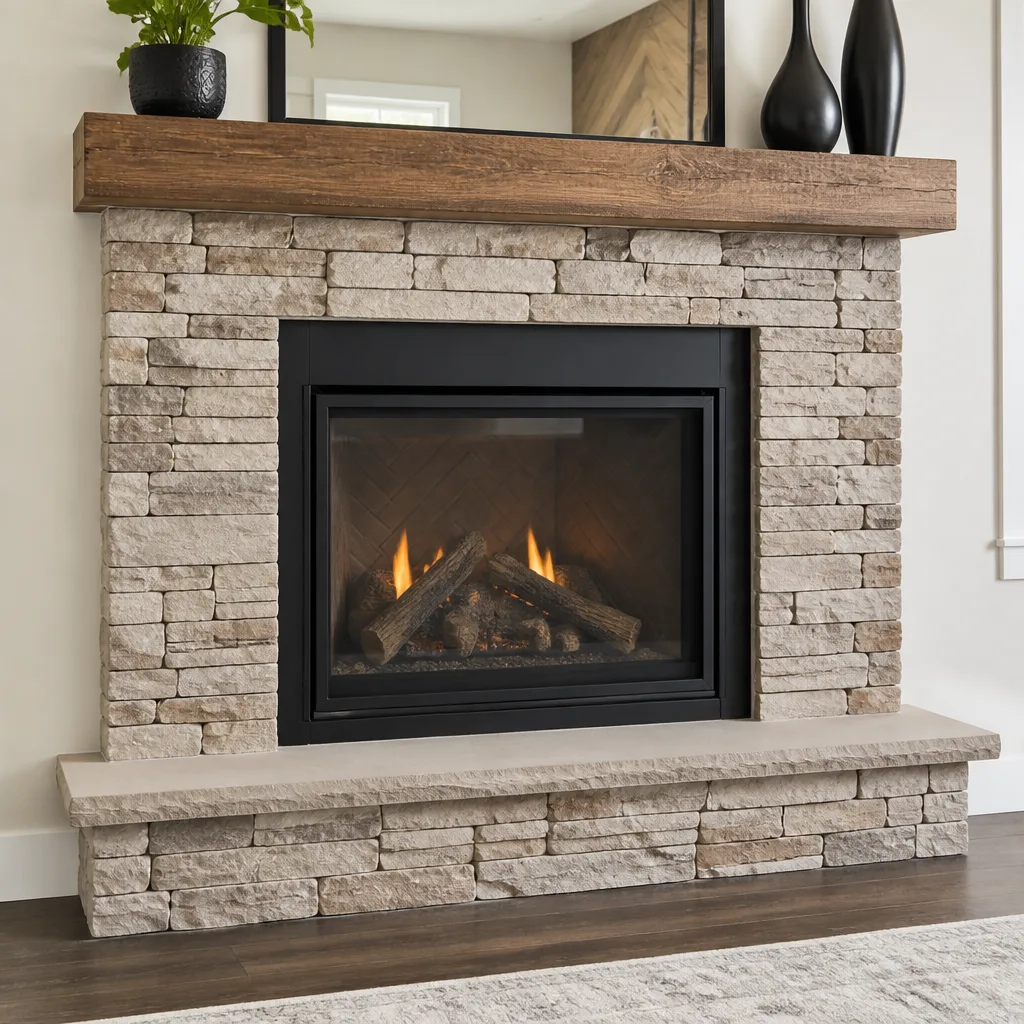 Gas fireplace service
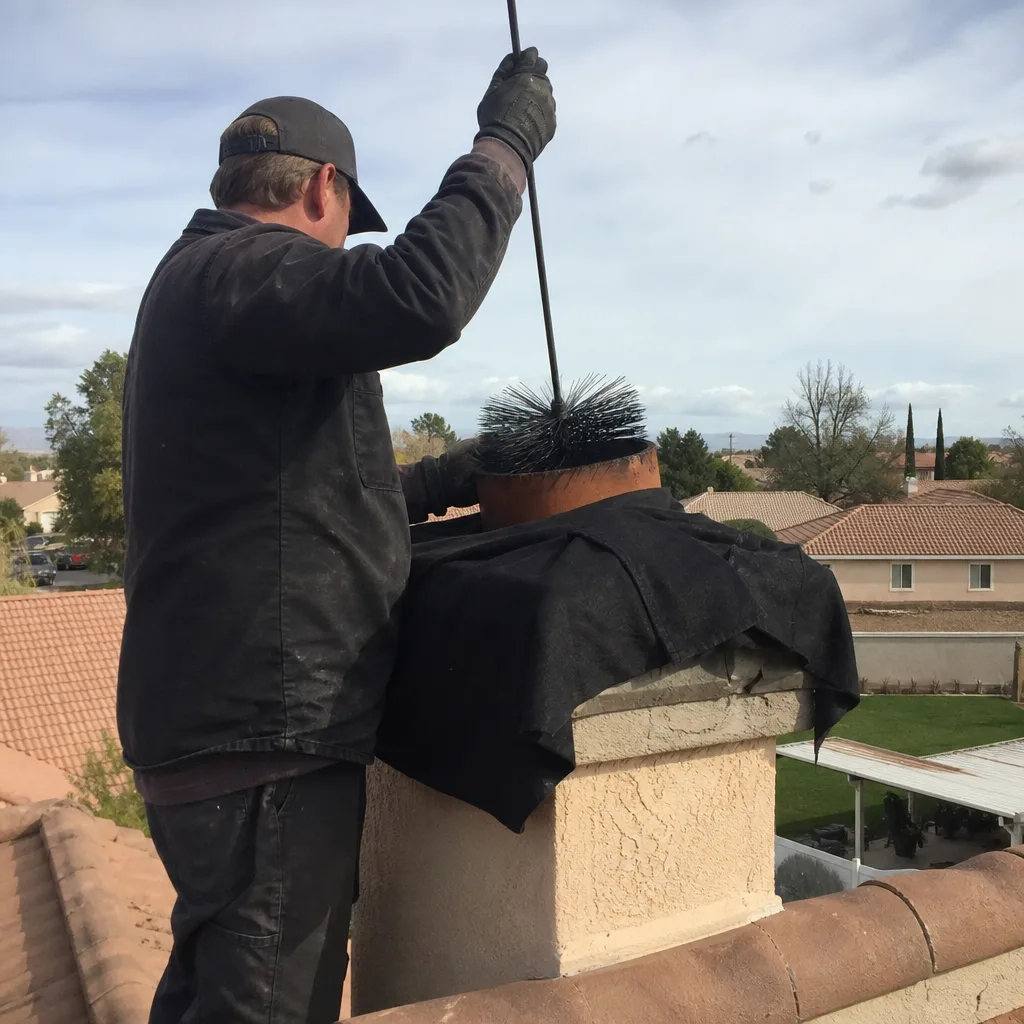
Level 1 sweep and inspection to the NFPA 211 annual standard - flue, crown, cap, and flashing checked and photographed
Chimney sweep logs do not sweep chimneys. They loosen some creosote - which then falls where a brush and vacuum still have to collect it.
Chimney Cleaning Permits, Codes & Inspections in Perris, CA: What You Need to Know
Most homeowners assume a chimney sweep is like a haircut: you show up, the work gets done, nobody calls the city. That holds true for routine cleaning. But the moment a technician finds a cracked liner, a compromised firebox, or a crown that needs reconstruction, you’ve crossed from maintenance into modification, and California stops treating your chimney like housekeeping. In Perris, where housing stock ranges from 1950s ranch homes off Redlands Avenue to newer subdivisions near the 215, the permit line is where homeowners get surprised. This guide maps exactly where that line sits, which repairs trigger Riverside County requirements, and how unpermitted chimney work can come back to haunt you at resale.
Quick Answer
A standard chimney sweep in Perris requires no permit. Cleaning, visual inspection, and minor maintenance fall outside California’s permit triggers. A permit is typically required when a contractor replaces a flue liner, reconstructs a chimney crown, modifies a firebox, or makes structural repairs to the chimney itself. If you’re buying or selling a home in Perris, unpermitted chimney work is a disclosure issue that can delay closing or reduce a sale price.
Styles & brands we work with
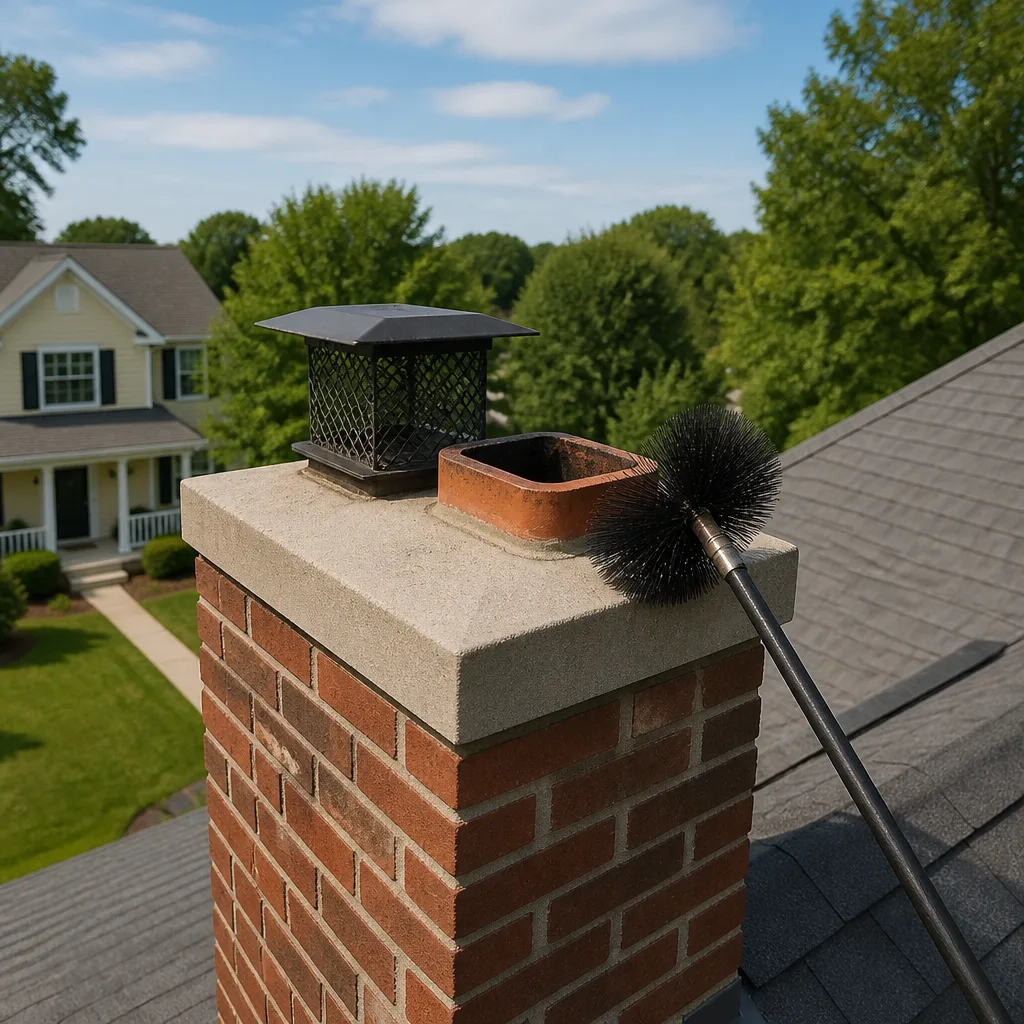
- Sweep & inspection
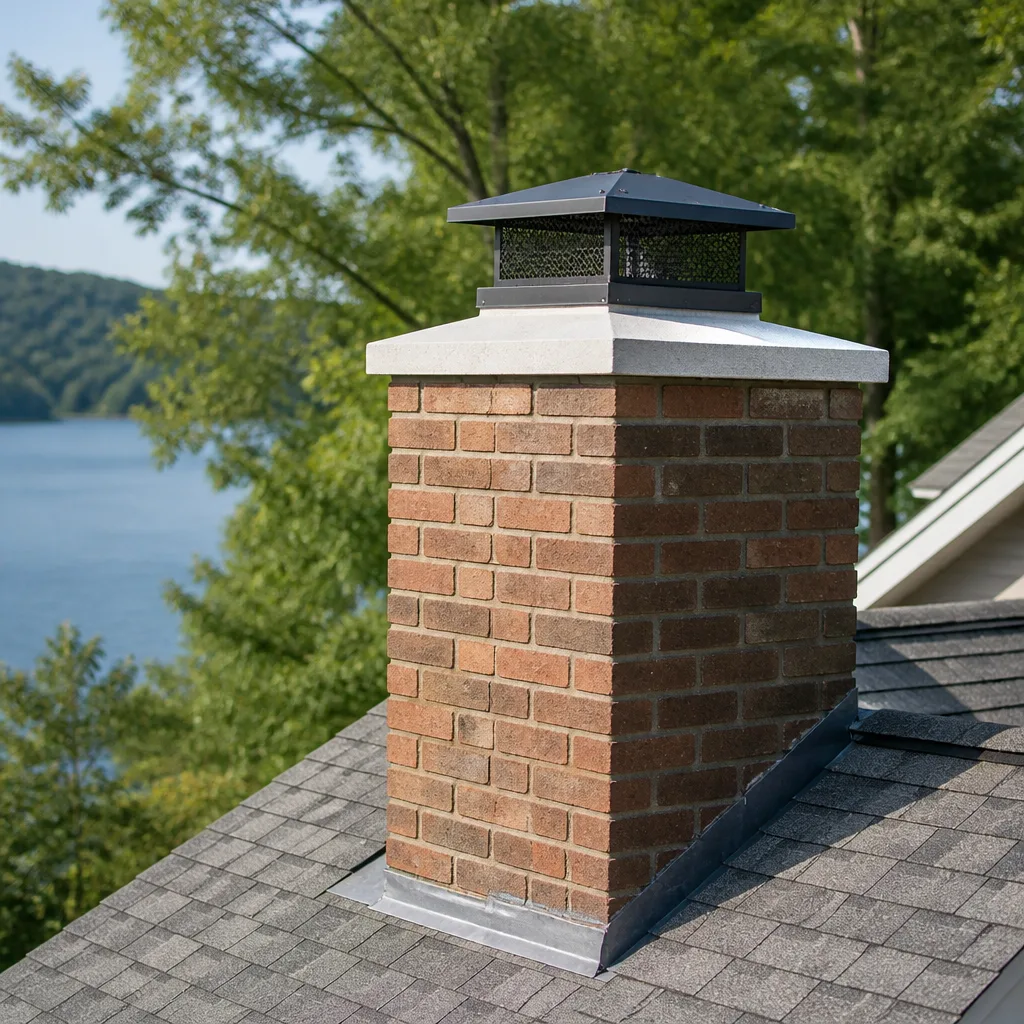
- Caps & crowns
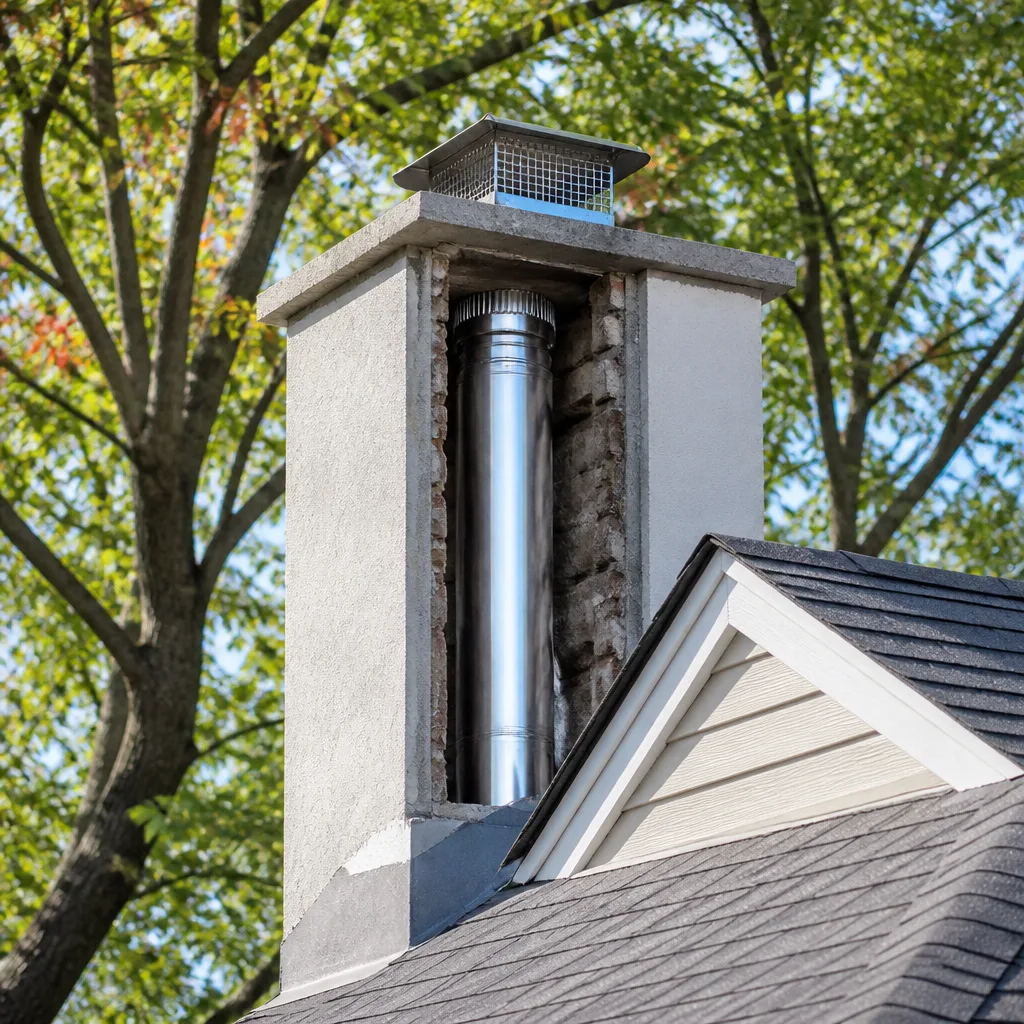
- Flue relining
- Masonry repair
- Gas fireplace service
Table of Contents
- The Legal Divide: Cleaning vs. Repair in California Code
- Riverside County and City of Perris: What Triggers a Permit
- Title 24 and Damper Replacement: The Energy Code Nobody Explains
- Level 2 Inspections: When the Law Requires More Than a Sweep
- How to Confirm a Contractor Pulled the Right Permits
- What to Do If Prior Chimney Work Lacks Permits
- How Perris Climate Affects Chimney Codes and Wear
- Permit Costs and Timelines in the Inland Empire
The Legal Divide: Cleaning vs. Repair in California Code
California Building Code does not require a permit for routine chimney sweeping, flue brushing, or Level 1 visual inspections. These are considered maintenance activities, the same category as changing a furnace filter or cleaning gutters. A chimney sweep removes creosote, inspects the flue with a mirror or camera, and documents what the technician sees. None of that changes the structure.
What crosses the line is any alteration to the chimney’s structural or functional components. Replacing a flue liner, whether it’s a stainless steel system or a cast-in-place relining, alters the venting path. Reconstructing a chimney crown changes water-shedding performance. Rebuilding a firebox modifies the combustion chamber. California code treats these as regulated work because a failed repair can vent carbon monoxide into living space or allow a chimney fire to reach the framing. The state’s logic is simple: cleaning removes what accumulated; repair changes what exists.
The practical distinction matters in Perris. A technician who brushes the flue and replaces a missing rain cap is doing maintenance. A technician who grinds out cracked firebox panels and relays them with refractory mortar has crossed into territory where the local building department expects a permit. We tell homeowners the honest version: if a repair involves demolition, replacement materials, or a change in how the chimney performs, ask the contractor to put the permit requirement in writing before work starts.
Riverside County and City of Perris: What Triggers a Permit
The City of Perris Building and Safety Department administers permits within city limits. Unincorporated areas fall under Riverside County. Both jurisdictions enforce the California Building Code, which means the permit triggers are consistent across the region, but the application process and fee schedules differ slightly depending on which counter you’re dealing with. For homeowners in Perris proper, the city is the authority. For those on the edges near Mead Valley or Romoland, the county may apply.
Work that typically requires a permit in Perris:
- Full or partial flue liner replacement, including stainless steel relining systems
- Chimney crown reconstruction when the existing crown is demolished and recast
- Firebox repair that involves removing and replacing refractory panels or rebuilding brickwork
- Structural repairs to the chimney stack, including repointing that extends beyond surface repair
- Changing the chimney’s height or footprint, such as adding a taller flue to fix draft issues
- Installing a new fireplace insert or converting a wood-burning fireplace to gas logs when the conversion alters the venting configuration
Work that typically does not require a permit:
- Routine chimney sweeping and creosote removal
- Level 1 or Level 2 inspection with a camera
- Rain cap or spark arrestor replacement on an existing flue
- Damper repair that uses the original damper frame and mechanism
- Minor crown sealing with a flexible sealant where no demolition occurs
- Cleaning and inspection as part of a dryer vent cleaning service, which is separate from chimney work entirely
The line between repointing and structural repair trips up homeowners in older Perris neighborhoods. Surface repointing, where a mason replaces deteriorated mortar joints a few inches deep, is generally considered maintenance. But once the mortar removal extends deep enough that the chimney’s stability is compromised, the work becomes structural, and a permit should be in place. When we assess a chimney in an older Perris home, we flag anything that looks like it might cross that line and recommend the homeowner confirm with the building department before authorizing the work.
Title 24 and Damper Replacement: The Energy Code Nobody Explains
California’s Title 24 energy code rarely comes up in chimney conversations, but it should. When a damper is replaced in a home built after 1992, or when a fireplace undergoes significant modification, Title 24’s building envelope requirements can apply. The code’s underlying goal is preventing conditioned air from escaping through the flue when the fireplace is not in use.
The practical implication for Perris homeowners is that a damaged throat damper cannot simply be swapped for any available replacement. If the original fireplace was designed with a damper that meets Title 24’s tight-sealing standards, the replacement needs to meet the same standard. A generic damper kit from a home center may not comply, and installing one could create an energy compliance problem that surfaces during a home sale inspection.
Compliant options generally fall into two categories: top-sealing dampers mounted at the flue opening, which create a mechanical seal at the point where air escapes, and tight-fitting throat dampers that replace the original unit with a model engineered to minimize leakage. Neither of these is a specialty product you’ll find on a shelf next to paint rollers. This is contractor territory. When we install dampers on Perris homes, we use components from manufacturers like Olympia Chimney, which are stocked by professional chimney supply houses and built to meet the performance expectations that Title 24 sets in California.
The permit question for damper work is nuanced. A direct replacement that maintains the original fireplace configuration rarely requires one. A damper installation that alters the flue, changes the firebox opening, or accompanies a liner replacement falls under whatever permit governs the larger job. If you’re unsure, the City of Perris plan check counter can confirm what applies to your specific fireplace before any work begins.
Level 2 Inspections: When the Law Requires More Than a Sweep
Most homeowners know what a sweep does. Fewer understand the inspection levels defined by the National Fire Protection Association standard for chimney inspection. A Level 1 inspection is the visual check that accompanies every routine sweep, looking at the accessible portions of the chimney interior and exterior. A Level 2 inspection goes further, typically including camera scanning of the flue interior and examination of the attic and crawlspace areas where the chimney passes through the home.
Level 2 inspections are legally required in specific real estate situations. When a property changes ownership in California, the standard of care points toward a Level 2 inspection when the fireplace will be used or when the buyer’s home inspector flags any condition suggesting hidden damage. If a chimney fire has occurred, even a small one, a Level 2 inspection is mandatory before the chimney can be returned to service. The same applies after a seismic event, a lightning strike, or any event that may have shifted the chimney structure.
In a real estate transaction, a Level 2 inspection report matters because it documents the flue’s condition in a way that a visual-only check cannot. Buyers’ inspectors in Riverside County increasingly flag chimneys as a standard item, and sellers who can produce a recent Level 2 report have a concrete answer. Conversely, a chimney that has never been inspected beyond a sweep leaves both parties guessing about what the flue lining actually looks like.
Perris sits in a seismically active region, a fact that gives Level 2 inspections extra weight. A chimney that shifted during a moderate earthquake can look fine from the firebox and roofline while having hairline cracks in the flue liner that only a camera reveals. This matters for code compliance because a cracked clay liner in a chimney that’s actively used is a fire risk that must be addressed before the chimney meets safe-use standards.
How to Confirm a Contractor Pulled the Right Permits
Contractors in Perris are responsible for pulling permits when the work requires them, but the homeowner ultimately owns the liability. If a contractor performs permitted work without a permit and then disappears, the city comes after the property owner, not the vanished contractor. This is why verifying permits before work begins matters more than verifying them after.
Steps to confirm a permit is in place before chimney repair work starts in Perris:
- Ask the contractor directly. A licensed contractor should state plainly whether the proposed work triggers a permit and, if so, who will pull it. If the contractor bristles at the question, that’s information.
- Request the permit number. Once the permit is pulled, the contractor can provide the application number. If they claim the permit is in process, ask for the date of application and the jurisdiction where it was filed.
- Verify with the City of Perris Building and Safety Department. The city can confirm whether a permit exists for your address. Online lookup tools are available, though a phone call works if you prefer speaking with someone.
- Check the contractor’s license status. California’s Contractors State License Board lets anyone verify that a contractor’s license is active and what classification it holds. Masonry and chimney work typically falls under a specialty classification.
- Ask about the inspection schedule. Permitted chimney work includes inspections at key stages. If the contractor says no inspections are needed for a permit-required repair, that’s a red flag.
Most reputable Chimney Sweep Perris contractors in the area are transparent about this process because they’ve been through it hundreds of times. The contractors worth avoiding are the ones who promise to skip the permit process entirely or say it’s unnecessary when the scope of work clearly says otherwise. Every legitimate repair contractor in Perris knows which repairs trigger permits, and the honest ones tell you before you sign anything.
What to Do If Prior Chimney Work Lacks Permits
Homeowners commonly discover unpermitted chimney work during a sale, when a buyer’s inspector or the title process surfaces the discrepancy. California law requires sellers to disclose known unpermitted work, and failing to do so creates legal exposure long after closing. The good news is that most unpermitted chimney work can be brought into compliance without tearing everything out.
The first step is documentation. Gather whatever proof exists of the prior work: invoices, contractor names, photographs taken during the project, anything that establishes what was done and when. Then contact the Perris building department and ask about the process for retroactive permits. Many jurisdictions, including Riverside County and the City of Perris, have a path for bringing unpermitted work into compliance, though it typically involves opening up portions of the work for inspection. For a chimney liner, that usually means a camera inspection of the flue and documentation of the materials used. For firebox repairs, it may mean exposing a section of the work.
If the prior work involved a liner replacement, a current Level 2 camera inspection can go a long way toward satisfying the building department that the installation meets code. We’ve worked with Perris homeowners who replaced liners years ago without permits and later needed retroactive approval for a sale. In most cases, a documented inspection showing proper material installation, correct clearances, and a sound flue was enough to move the process forward. The cost of bringing work into compliance is almost always less than the cost of the sale falling through.
If you’re the buyer rather than the seller, discovering unpermitted chimney work during escrow is a negotiation point, not necessarily a deal killer. The buyer can request the seller complete the permit process before closing, ask for a credit to handle it after closing, or proceed with a clear understanding of what compliance will require. A Perris buyer who gets a Level 2 inspection and a contractor estimate for retroactive permitting is negotiating from a position of knowledge.
How Perris Climate Affects Chimney Codes and Wear
Perris has a hot semi-arid climate, which means intense summer sun, mild winters, and very little rainfall by national standards. That climate profile shapes chimney conditions in ways that differ from colder or wetter regions. In Perris, the freeze-thaw cycles that damage chimneys in the Midwest or Northeast are not a factor. Homeowners here don’t face ice-driven crown cracking or mortar spalling from repeated freezing. What they do face is prolonged UV exposure, which breaks down cap materials and top coatings faster, and the occasional intense rain event that tests the chimney’s ability to shed water quickly.
The building code treats climate zone as a factor in certain chimney requirements, but the more practical implication for Perris homeowners is what wears out and why. Rain caps, crown coatings, and chase covers take more sun-related abuse here than they would in a coastal climate with cloud cover. The clay or concrete flue liners inside the chimney, by contrast, are more likely to show age from heat cycling and the settling that comes with the region’s seismic activity than from moisture-driven damage.
This matters for permit and repair decisions because the types of repairs Perris homeowners need are often different from what a contractor from a wetter climate might assume. A crown in Perris may need replacement due to UV-brittled coatings rather than freeze-cracking, and the permit requirements are the same either way. When we evaluate a chimney in Perris, we look at sun exposure, the condition of cap components, and the specific way the local climate has stressed the materials, which means our repair recommendations are grounded in what actually happens to chimneys here, not a generic template.
Permit Costs and Timelines in the Inland Empire
Permit fees for chimney repair work in Perris are based on the valuation of the work, following the standard California approach. A liner replacement valued at a few thousand dollars might carry a permit fee in the low hundreds. A complete firebox reconstruction and relining will be higher because the work valuation drives the fee. The city’s fee schedule is available from the Building and Safety Department, and the cost should always be itemized in a contractor’s written estimate so you can see exactly what’s going to the city versus what’s going to labor and materials.
Timelines vary with the city’s workload. Simple permits for straightforward repairs often clear in a week or two when plans are not required. Work that requires plan review, such as modifications to firebox dimensions or structural repairs to the chimney stack, takes longer. Plan check review adds time, and any corrections the reviewer requests add more. None of this should be a mystery when work begins; a contractor who has done chimney repair in Perris can tell you what to expect for your specific scope.
Some repair approaches affect the permit timeline simply by changing what’s being done. HeatShield, a resurfacing system that seals and restores existing flue liners without a full tear-out, sometimes falls into a different regulatory category than a complete liner replacement, because the original liner remains in place and the work is a restoration rather than a removal and new installation. This can simplify the permit process in some cases and complicate it in others, depending on how the building department classifies the work. It’s worth asking about when a repair is scoped. Similarly, a DuraFlex flexible liner system can access flues that would otherwise require extensive demolition, but the installation still changes the venting path and needs to go through the same permit process as any other liner replacement.
A complete relining or firebox rebuild in Perris, including permit time, typically takes one to two weeks once work begins. The inspection process adds a day or two, depending on scheduling. Repairs that are purely maintenance, like a sweep and inspection, are generally completed same-day and involve no permits at all. Understanding where your specific job falls on that spectrum is part of getting an honest estimate.
Common Mistakes to Avoid
- Assuming all chimney work is permit-free. The maintenance-versus-modification line is real, and crossing it without a permit creates disclosure problems at resale. Cleaning is exempt; relining, crown reconstruction, and firebox repair generally are not.
- Taking a contractor’s word without verification. Some contractors say a permit is unnecessary when the scope clearly requires one, either to save time or because they lack the license to pull permits. Verify with the City of Perris before work starts.
- Ignoring a small firebox crack because “it still works.” Cracks in refractory panels admit heat to combustible materials behind the firebox. In Perris homes, where many fireplaces are decades old, this is one of the most common hidden hazards we find.
- Replacing a damper with whatever fits. Title 24 requirements and fireplace-specific engineering mean a generic damper can create energy code compliance issues. Use a contractor who understands California’s damper standards.
- Skipping a Level 2 inspection before buying a home with a fireplace. A Level 1 sweep won’t reveal a cracked liner hidden behind the flue’s upper reaches. Buyers in Perris should insist on a camera inspection for any chimney they plan to use.
- Failing to disclose known chimney work when selling. California’s disclosure requirements apply to unpermitted work, and sellers who knowingly omit chimney repairs create legal exposure. Bring the work into compliance before listing.
- Treating the permit as optional because the repair is “small.” The permit trigger depends on the type of work, not the square footage of the repair. A small section of firebox rebuild counts the same as a large one.
See the difference
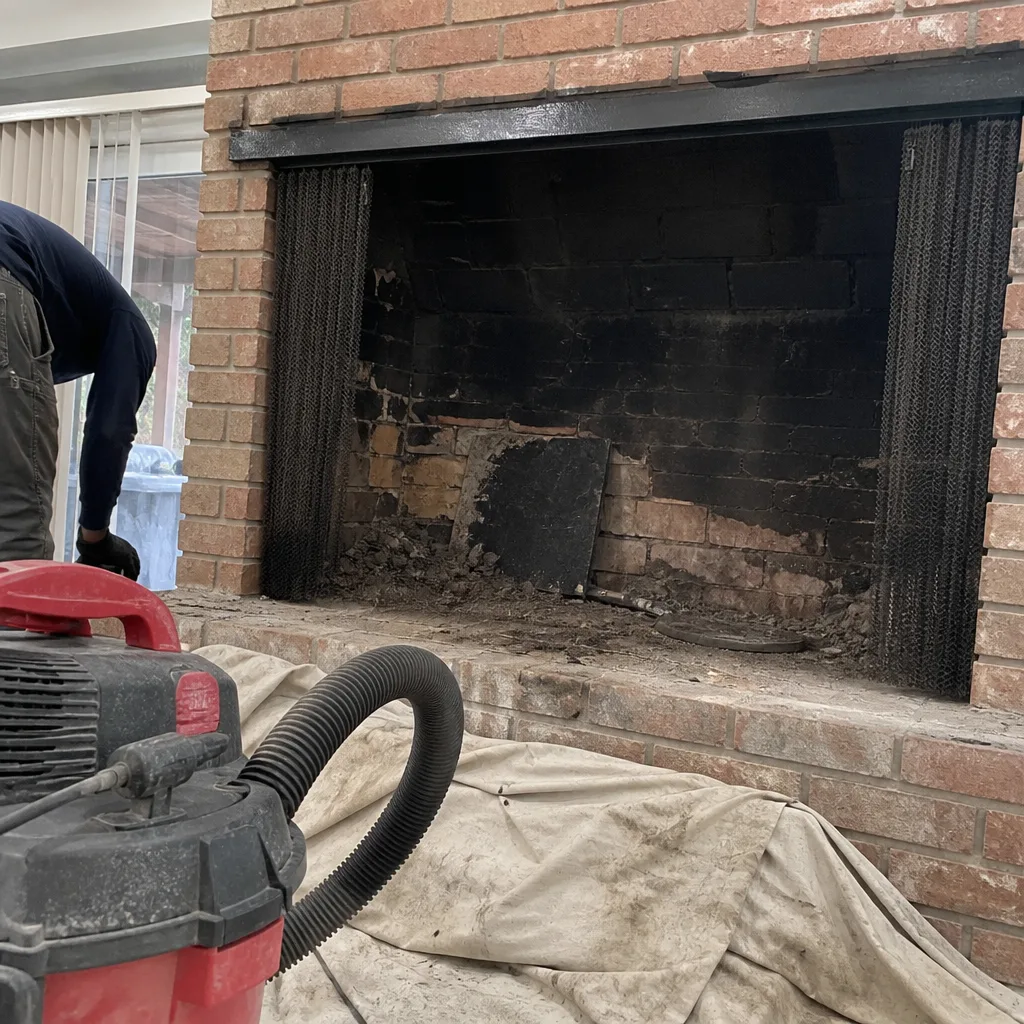 Before
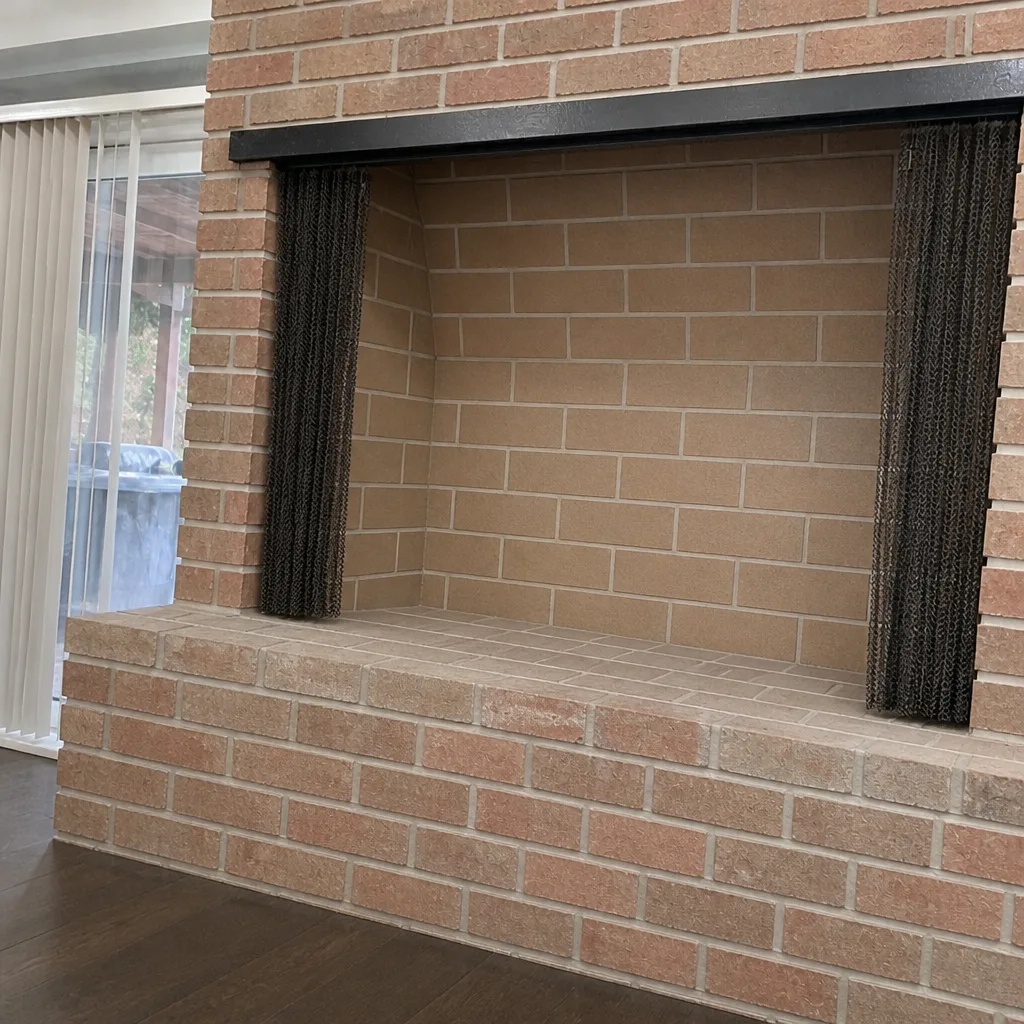 After
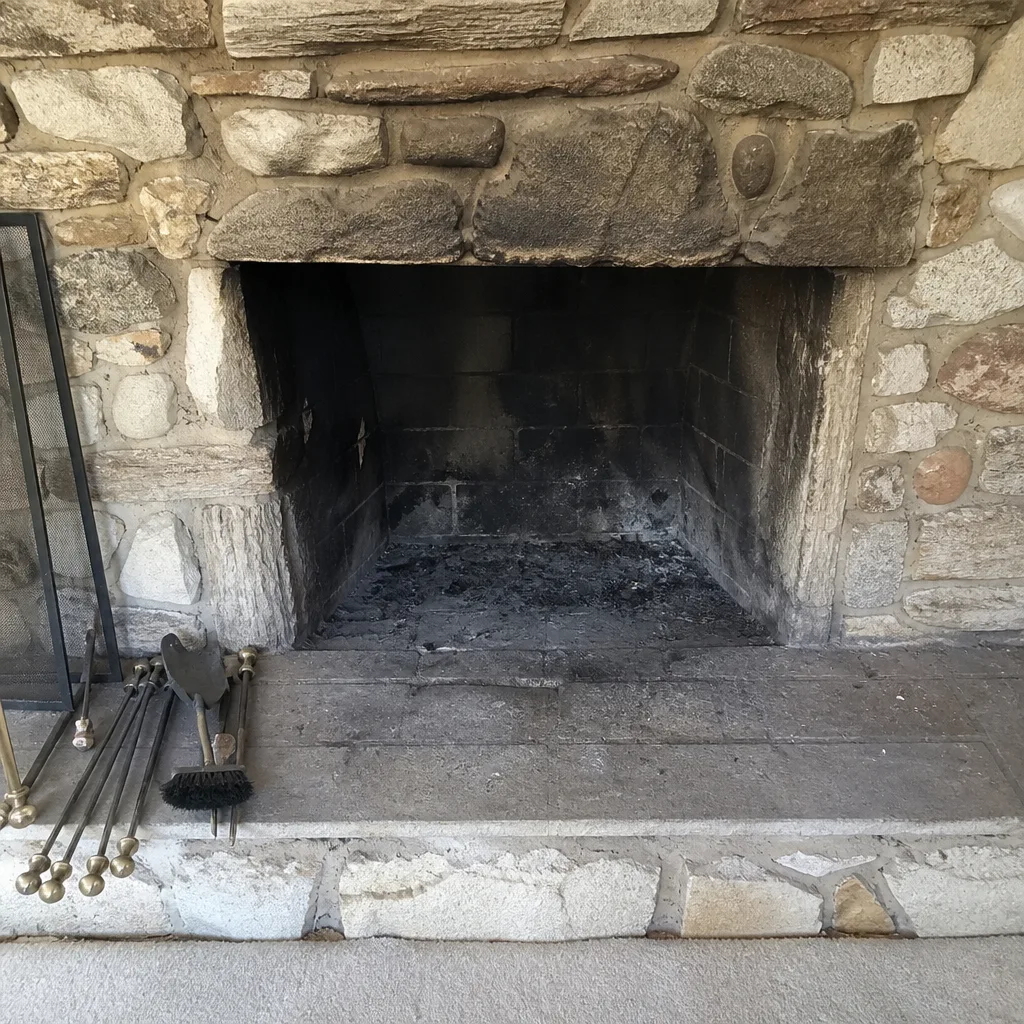 Before
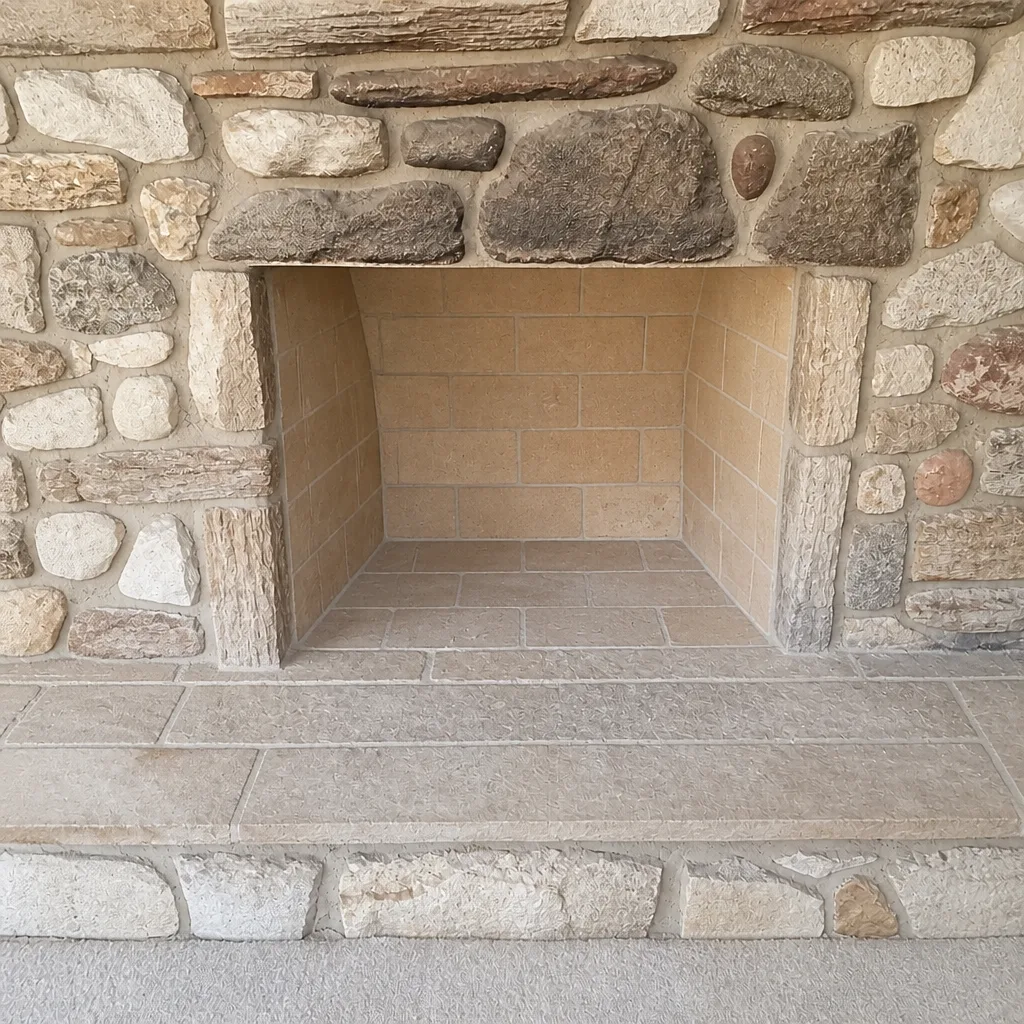 After
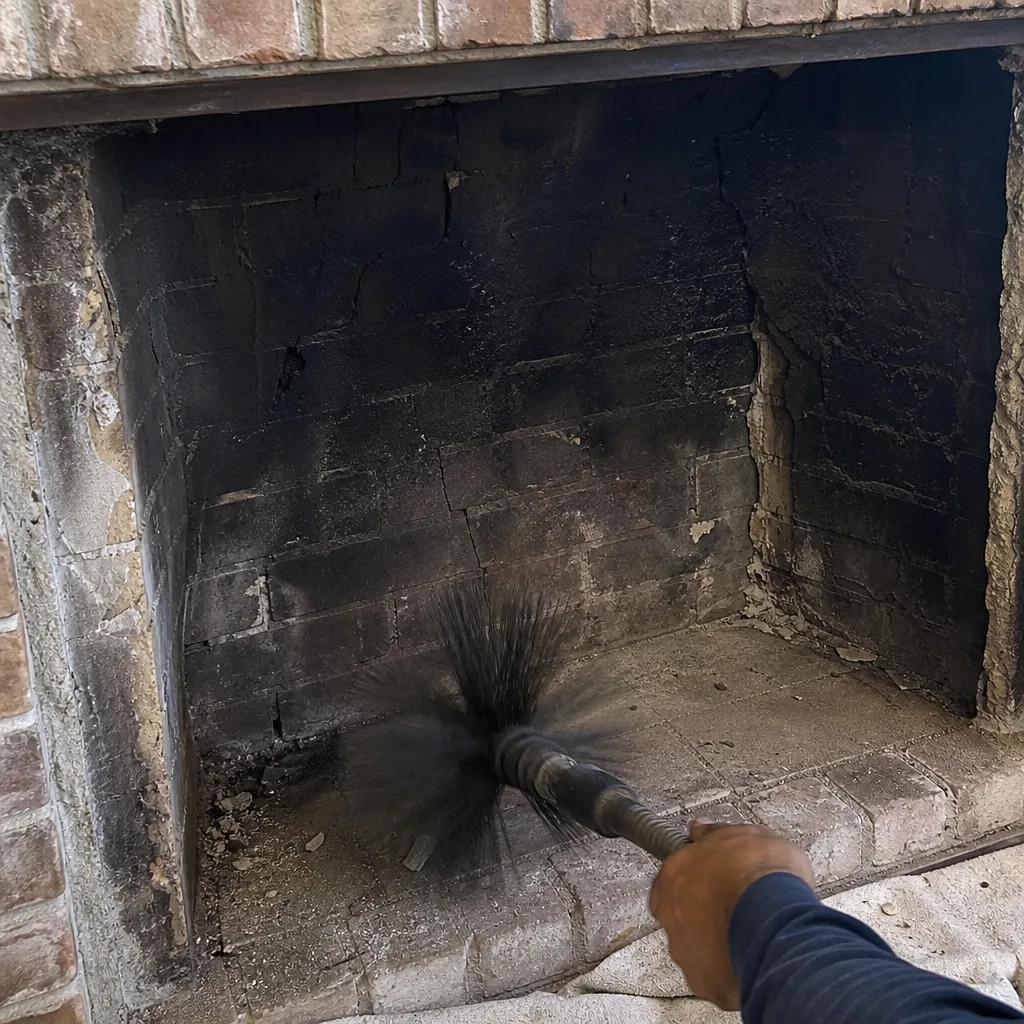 Before
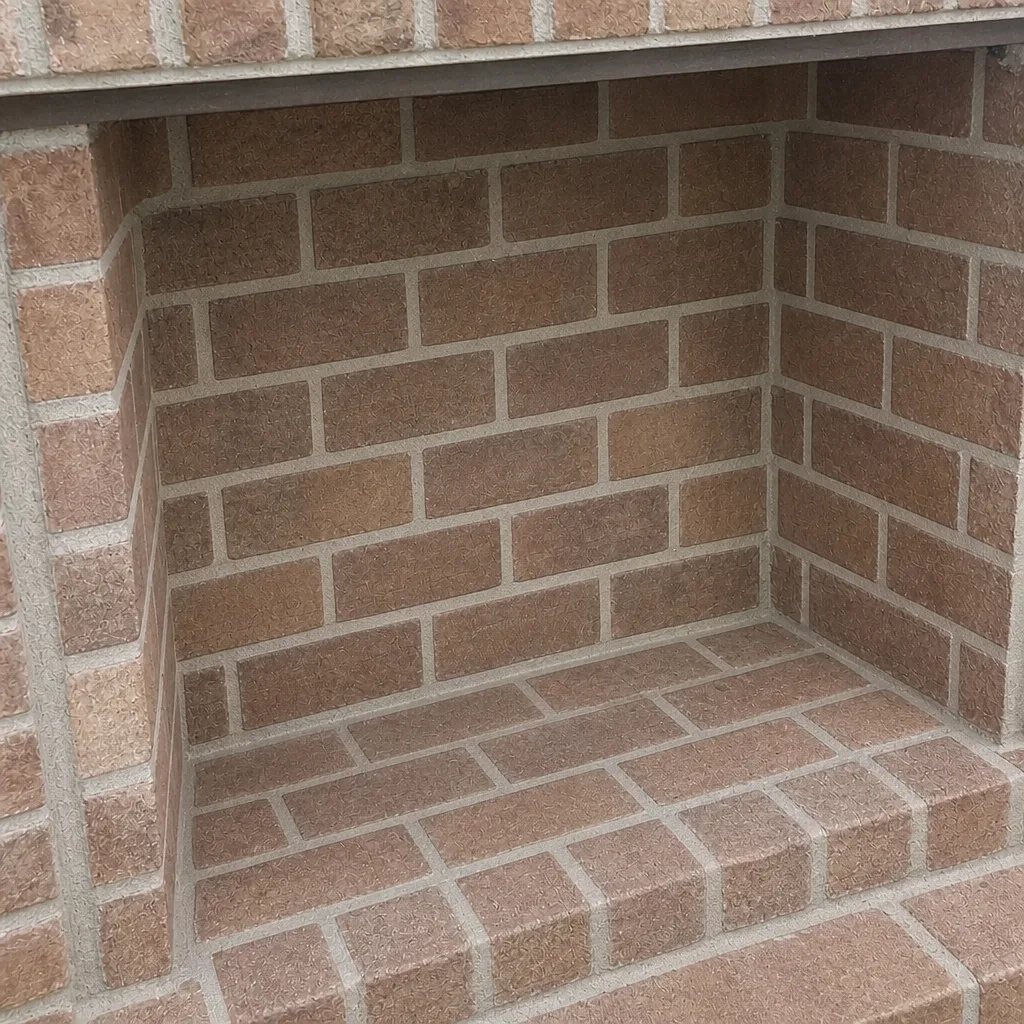 After
When to Call a Professional
You should call a professional whenever a sweep reveals damage, whenever you’re buying or selling a Perris home with a fireplace, or whenever a home inspector flags the chimney for further review. The same goes after a chimney fire, even a brief one, and after any noticeable seismic event. If you smell smoke inside the home when the fireplace isn’t in use, that is a carbon monoxide and draft concern that needs immediate attention. Cracks in the firebox, water staining on interior walls near the chimney, or a damper that no longer closes tightly are all signs that the chimney needs more than cleaning. Chimney Sweep Perris offers free estimates in Perris and can assess permit requirements for any repair scope. Call (833) 593-5414. We answer 24/7. Fast dispatch from 7am to 7pm, Sunday through Friday.
Frequently Asked Questions
No. Routine chimney sweeping and visual inspection require no permit in Perris because they don’t alter the chimney’s structure or venting. This applies to standard sweeping, camera inspections, and standard maintenance like rain cap replacement. Call (833) 593-5414 for a free estimate.
Yes, replacing a flue liner typically requires a building permit in Perris and unincorporated Riverside County because it changes the venting path and involves regulated materials. The same applies to stainless steel relining systems, cast-in-place liners, and other full liner replacements. The written estimate should itemize the permit fee separately.
The National Fire Protection Association recommends annual inspection for chimneys in regular use, with a sweep performed when creosote reaches 1/8 inch of buildup. Homes in Perris that burn wood seasonally, which is common given the mild winters, should follow the same annual inspection cadence to catch early wear before it becomes a permit-level repair.
A Level 1 inspection is visual and accompanies every routine sweep, covering accessible portions of the chimney. A Level 2 inspection adds camera scanning of the flue and examination of attic and crawlspace areas, and it’s required for real estate transactions, after chimney fires, and after events like earthquakes that may have shifted the structure.
You can sell, but California law requires disclosure of known unpermitted work, and failing to disclose creates legal exposure. The practical path is to bring the work into compliance through a retroactive permit, which typically requires an inspection and possibly opening up portions of the work to verify it meets code.
Ask for a Level 2 camera inspection to document exactly what the inspector saw. If the condition involves a cracked liner, firebox damage, or crown failure, get a written repair estimate from a licensed chimney contractor that includes permit requirements. The estimate should make clear whether the repair falls into maintenance or modification territory.
The Bottom Line
The permit question for chimneys in Perris comes down to one distinction: is the work removing what accumulated, or changing what exists? Sweeping, inspection, and minor maintenance need no permit and should happen on a regular schedule. Liner replacement, crown reconstruction, firebox repair, and structural work usually do, and the consequences of skipping the permit process surface at inspection time, sale time, or worse, when a hidden defect fails. The path that protects homeowners runs through honest contractor communication, verification with the City of Perris, and a documented inspection history. If your chimney hasn’t been looked at recently, a sweep and Level 1 inspection is the cheapest permit compliance question you’ll ever answer.
Written by the team at Chimney Sweep Perris, serving Perris since 2013.